US Oil Production Soars: How Tight Oil Fuels Global Dominance
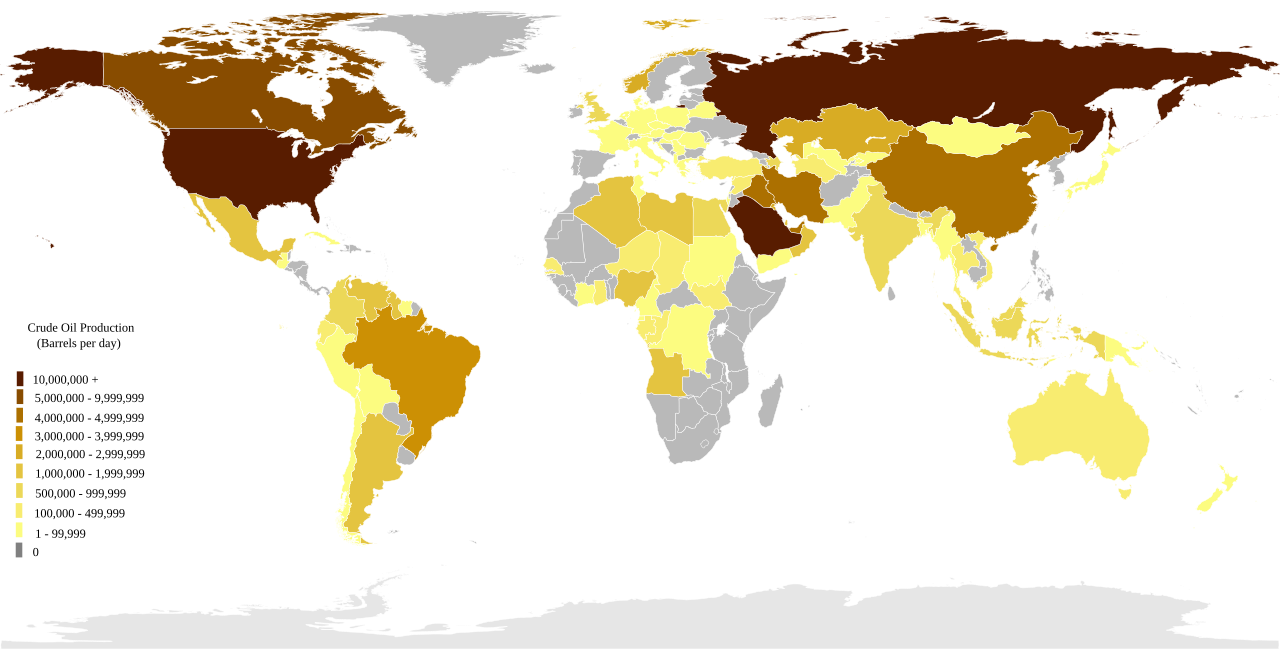
The global energy landscape has witnessed a monumental shift, largely driven by the United States' unprecedented surge in oil production. For years, the discussion around Oil Production By Country revolved around the traditional giants of the Middle East and Russia. However, recent advancements have firmly established the U.S. as the undisputed leader, fundamentally reshaping international energy markets and geopolitical power dynamics.
This remarkable ascent isn't merely about increased output; it's a testament to groundbreaking technological innovation, particularly in the realm of unconventional tight oil production. The ripple effects of this transformation are felt worldwide, influencing everything from fuel prices at the pump to the strategic positioning of nations.
The Rise of a Superpower: How Tight Oil Transformed US Dominance
The numbers speak volumes about the U.S.'s meteoric rise. In 2024, the United States is projected to produce an astounding 20.1 million barrels of oil per day. To put this into perspective, this figure represents an increase of nearly 13 million barrels daily compared to 2010. This staggering growth has propelled the U.S. far ahead of its closest competitors. While Saudi Arabia and Russia remain formidable players, their output hovers around 10.9 million and 10.8 million barrels per day, respectively, placing them significantly behind the U.S. leader.
The term "oil production" in this context is comprehensive, encompassing not only crude oil but also shale oil, oil sands, and natural gas liquids (NGLs). This diverse portfolio contributes to the resilience and scale of American output.
Understanding the Tight Oil Revolution
The engine driving this American dominance is undoubtedly the "tight oil revolution." Tight oil refers to crude oil trapped in formations of impermeable rock, such as shale, sandstone, and limestone. For decades, these reserves were considered economically unviable due to the difficulty of extraction. However, the synergistic application of two key technologies changed everything:
- Horizontal Drilling: This allows drillers to turn the wellbore horizontally after reaching the target formation, exposing a much larger section of the oil-bearing rock.
- Hydraulic Fracturing (Fracking): Once horizontally drilled, a mixture of water, sand, and chemicals is injected at high pressure to create micro-fractures in the rock. The sand props these fractures open, allowing the trapped oil and gas to flow to the surface.
These innovations have unlocked vast resources previously inaccessible, primarily in states like Texas and North Dakota. The efficiency and scale achieved through these methods have drastically lowered production costs over time, making tight oil a competitive and reliable source of energy.
Shifting Global Dynamics: The US vs. Traditional Producers
The U.S.'s newfound status as the top global oil producer has profound implications for the world order. It has significantly enhanced American energy independence, reducing reliance on volatile regions and imports from other countries. This not only bolsters national security but also grants the U.S. greater flexibility in its foreign policy. For an in-depth look at how actual production outweighs proven reserves in today's market, explore Beyond Reserves: Who Produces the Most Oil Globally in 2024?
The surge in U.S. output has also challenged the traditional market influence of organizations like OPEC (Organization of the Petroleum Exporting Countries). While OPEC still holds significant sway, particularly with its vast conventional reserves, the sheer volume of American tight oil provides a crucial counterweight, often moderating price swings and increasing global supply stability. This dynamic ensures that when discussing Oil Production By Country, the U.S. must now be seen as a primary driver of global market trends, not just a consumer.
Mapping US Oil Power: The PADD System and Key Regions
To understand the nuances of U.S. oil production, it's essential to recognize its internal structure. The country is divided into five regional divisions known as Petroleum Administration for Defense Districts (PADDs). Created during World War II to organize the allocation of petroleum products, these regions continue to be vital for data collection and strategic planning.
PADD 3: The Unquestioned Heartbeat of US Production
Among all PADDs, PADD 3, encompassing the Gulf Coast states, stands out as the undisputed leader. This region, particularly the state of Texas, is the engine room of American oil output. In 2021, PADD 3 recorded an astonishing daily crude oil production of approximately 7.9 million barrels. This figure alone highlights its critical importance to the nation's overall energy portfolio.
The dominance of PADD 3 is hardly surprising given Texas's geological bounty. The Permian Basin, straddling West Texas and southeastern New Mexico, is arguably the most prolific oil basin in the world, a veritable hub of tight oil activity. Its extensive infrastructure, including pipelines, refineries, and export terminals along the Gulf Coast, further solidifies PADD 3's role as the powerhouse of U.S. energy production.
A Look at Other Significant PADDs
While PADD 3 reigns supreme, other regions also contribute to the national total, albeit on a smaller scale:
- PADD 1 (East Coast): With production volumes of only 74 thousand barrels per day, this region is a net importer and consumer, with minimal indigenous production.
- PADD 2 (Midwest): Home to significant refining capacity and some production from states like Illinois and North Dakota (partially).
- PADD 4 (Rocky Mountain Region): Features production from states like Colorado, Wyoming, and Utah, often with unique geological challenges.
- PADD 5 (West Coast): Characterized by mature oil fields in California and a strong focus on environmental regulations.
The stark contrast between PADD 3's output and that of other regions, especially PADD 1, underscores the concentrated nature of U.S. oil abundance. For a deeper dive into how these regional hubs contribute to global rankings, review Global Oil Production: Ranking Top Countries & US Regional Hubs.
Beyond the Barrels: Economic & Geopolitical Impact
The economic benefits of soaring U.S. oil production are undeniable. It has spurred job creation across a wide array of sectors, from drilling and engineering to manufacturing and logistics. The influx of investment into the energy sector has also stimulated local economies in producing regions. Furthermore, reduced reliance on foreign oil has improved the U.S. trade balance, strengthening its economic standing on the global stage.
Geopolitically, the U.S.'s energy ascendancy provides significant leverage. It allows the nation to exercise greater influence in international affairs, particularly in regions prone to energy supply disruptions. The ability to export crude oil and refined products offers allies greater supply security and diversifies global energy flows, reducing the potential for any single nation or cartel to weaponize energy resources.
Future Outlook: Sustainability and Innovation in US Oil Production
While the U.S. enjoys its current position at the pinnacle of Oil Production By Country, the future of the industry is subject to ongoing debate. Challenges include increasing environmental scrutiny, the imperative for sustainable practices, and the long-term global transition towards renewable energy sources. However, the sector continues to demonstrate remarkable adaptability and innovation.
Continuous advancements in extraction efficiency, carbon capture technologies, and responsible environmental stewardship are becoming paramount. The U.S. energy sector is not only focused on maximizing output but also on integrating cleaner production methods and exploring its role in a diversifying energy mix. The expertise gained in tight oil production, for instance, could even be leveraged for geothermal energy extraction or carbon storage, demonstrating the industry's potential for evolution.
In conclusion, the United States has fundamentally transformed the landscape of global energy production. Driven by the revolutionary advances in tight oil extraction, its output has surpassed all other nations, establishing an unprecedented level of energy independence and geopolitical influence. From the bustling Permian Basin in PADD 3 to the strategic implications for global markets, the story of U.S. oil production is one of innovation, resilience, and undeniable global dominance. As the world continues to navigate complex energy challenges, the role of the U.S. as a leading oil producer will remain a critical factor in shaping our collective future.