The Shifting Landscape of Global Oil Production: Who Leads in 2024?
In the complex and ever-evolving world of global energy, understanding who produces the most oil is crucial for gauging economic power, geopolitical influence, and market stability. While conversations often revolve around countries with the largest proven oil reserves, the true measure of a nation's impact on the global supply chain lies in its actual output. As we navigate 2024, the landscape of global oil production by country reveals a fascinating story of technological innovation, strategic positioning, and a clear leader that might surprise those unfamiliar with recent energy shifts.
Forget the notion that massive underground reserves automatically translate to top-tier production. While having abundant resources is a foundational advantage, a nation's ability to extract, process, and bring that oil to market is what truly defines its role. This article delves into the latest figures, dissecting the factors that propel the top producers and offering insights into the underlying mechanisms that shape the world's energy future.
The Global Leaders in Oil Production: A 2024 Snapshot
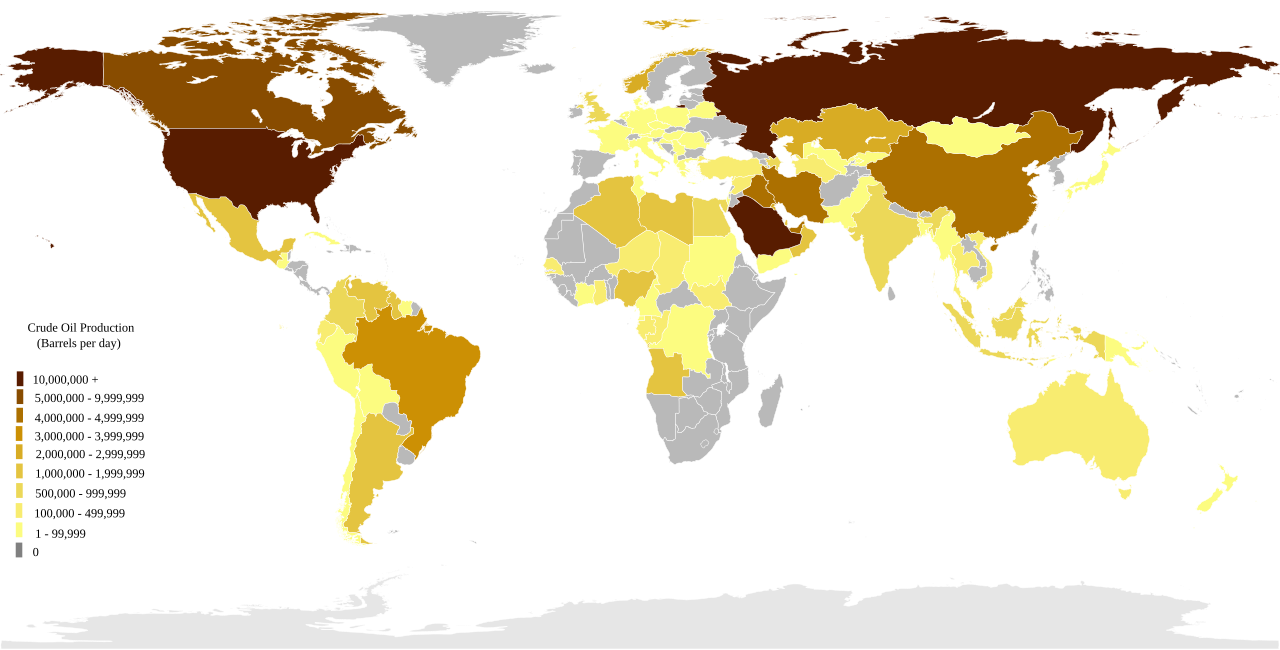
When we look at the definitive figures for oil production by country in 2024, one nation stands head and shoulders above the rest: the United States. Its ascent to the top spot is not merely incremental but a monumental shift driven by a relentless embrace of new extraction technologies. The sheer volume of U.S. output highlights a dramatic transformation in global energy dynamics.
- The United States: A Dominant Force
In 2024, the United States is projected to produce an astonishing 20.1 million barrels of oil per day. This figure is not just impressive in isolation; it represents a nearly 13 million barrels per day increase compared to its 2010 output. This remarkable surge is largely attributable to significant advancements in unconventional tight oil production, commonly known as shale oil. The ability to extract oil from previously inaccessible shale formations has fundamentally reshaped America's energy independence and its role as a global supplier. This includes a comprehensive definition of oil production, encompassing crude oil, shale oil, oil sands, and natural gas liquids (NGLs), providing a holistic view of hydrocarbon output. - Saudi Arabia: A Pillar of Stability (and Output)
Following the U.S. is Saudi Arabia, maintaining its crucial role in the global market with an estimated daily output of around 10.9 million barrels. As the de facto leader of OPEC (Organization of the Petroleum Exporting Countries), Saudi Arabia's production levels are often a finely tuned balance between market demand, strategic influence, and long-term reserve management. Its conventional oil fields are among the largest and most cost-effective to operate globally, making it a pivotal player. - Russia: Geopolitical Player and Major Producer
Rounding out the top three is Russia, with an estimated daily production of approximately 10.8 million barrels. Russia's vast territory holds significant oil reserves, and its production capabilities are a cornerstone of its economy and geopolitical leverage. Its role in the European energy market, in particular, has been a subject of intense scrutiny and strategic maneuvering.
These top three nations collectively represent a significant portion of the world's total oil supply, making their individual production policies and capabilities critical to global energy security and price stability. For a deeper dive into how the U.S. achieved this remarkable feat, explore our related article: US Oil Production Soars: How Tight Oil Fuels Global Dominance.
The Engine Room: Unpacking U.S. Oil Production Dynamics
While the overall U.S. production figure is staggering, understanding where this oil comes from within the country adds another layer of insight into its energy prowess. The United States employs a unique system of five regional divisions for oil production, known as Petroleum Administration for Defense Districts (PADDs).
Understanding PADDs: A Legacy of Wartime Strategy
These PADDs were originally established during World War II, primarily to organize the allocation of petroleum fuels and products across the country. Remarkably, these regions are still utilized today, serving as vital frameworks for data collection and analysis of oil production, refining, and consumption.
- PADD 3: The Uncontested Powerhouse
Of all the PADDs, PADD 3, which encompasses the critical Gulf Coast states, has by far recorded the largest daily crude oil production. In 2021, this region alone produced an astounding 7.9 million barrels per day. The dominance of PADD 3 is hardly surprising when considering that Texas, a key state within this division, is by far the single largest crude oil-producing state in the nation. Its extensive oil fields, advanced infrastructure, and favorable regulatory environment make it the epicenter of American oil output. - A Tale of Contrasts: PADD 1
To put PADD 3's output into perspective, consider PADD 1, which covers the East Coast. Production volumes here were a mere 74 thousand barrels per day in 2021. This stark contrast underscores the geographically concentrated nature of high-volume oil production within the U.S., emphasizing the critical role of specific regions like the Gulf Coast in sustaining the nation's overall output. Understanding the PADD system offers a deeper insight into American energy policy and infrastructure. For more details on these regional hubs, check out: Global Oil Production: Ranking Top Countries & US Regional Hubs.
Beyond Reserves: The Nuance of Production Capability
It's a common misconception to equate vast proven crude oil reserves with top-tier daily production. While countries like Venezuela and several Middle Eastern nations indeed boast some of the largest proven reserves globally, their actual daily output doesn't always place them at the very top of the production charts. This distinction is paramount when analyzing oil production by country.
The Difference Between Potential and Output
Proven reserves represent the estimated quantity of oil that can be recovered with reasonable certainty under existing economic and operating conditions. However, transforming these reserves into actual production depends on a multitude of factors:
- Technological Prowess: The U.S. is a prime example. While it doesn't possess the largest traditional conventional oil reserves, its mastery of advanced extraction techniques like hydraulic fracturing and horizontal drilling for tight oil has unlocked immense resources that were previously uneconomical or inaccessible. This technological edge allows it to produce at levels far exceeding countries with larger conventional reserves but less advanced recovery methods.
- Investment and Infrastructure: Developing oil fields, building pipelines, refineries, and export terminals requires massive capital investment and robust infrastructure. Political stability, investor confidence, and access to advanced services are critical.
- Geopolitical Stability and Policy: Internal conflicts, sanctions, nationalization policies, or unfavorable regulatory environments can severely hamper a country's ability to maximize its production, regardless of its reserves. Venezuela, for instance, has faced significant challenges in this regard.
- Production Costs: The economic viability of extracting oil plays a significant role. Some reserves are simply too expensive to produce at current market prices, making them less competitive than lower-cost alternatives.
Therefore, when evaluating the global energy landscape, it's essential to look beyond raw reserve numbers and focus on the practical realities of production capability and the factors enabling or hindering it. Don't confuse potential with actual output.
The Future of Global Oil Production: Trends and Insights
The global oil market is a dynamic entity, influenced by technological breakthroughs, geopolitical shifts, and the accelerating energy transition. While the top producers may dominate the current landscape, the future holds intriguing possibilities and challenges for oil production by country.
Key Trends Shaping Tomorrow's Output:
- Innovation Continues: The success of tight oil in the U.S. demonstrates that technological innovation can profoundly alter production capacities. Future advancements in enhanced oil recovery (EOR), digitalization, and automation could unlock new reserves or make existing ones more efficient.
- Energy Transition Pressures: The global push towards decarbonization and renewable energy sources will increasingly influence long-term investment in oil production. While demand for oil is expected to persist for decades, the rate of growth and the strategic importance of various producers might shift as countries commit to net-zero targets. This pressure could lead to diversification strategies for oil-rich nations.
- Geopolitical Influence: Supply disruptions due to geopolitical tensions remain a constant threat. Decisions by major producers, whether for economic or political reasons, can send ripples through global markets, affecting prices and energy security worldwide.
- Demand Evolution: Emerging economies, particularly in Asia, will continue to drive a significant portion of global oil demand. The rate of their industrialization and the adoption of cleaner energy alternatives will be crucial determinants of future production requirements.
For investors, policymakers, and energy consumers, keeping an eye on these trends is paramount. The interplay between traditional energy sources and the transition to renewables will define the next chapter of global energy. The resilience and adaptability of top oil-producing nations will be tested as the world seeks a more sustainable energy mix.
Conclusion
In 2024, the narrative of global oil production is clearly dominated by the United States, whose technological prowess in unlocking unconventional tight oil has fundamentally reshaped its position from a major importer to the world's leading producer. Following closely are the established giants, Saudi Arabia and Russia, whose vast resources and strategic market roles continue to hold significant sway. Understanding the nuances between proven reserves and actual production capacity, as well as the intricate internal dynamics like the U.S. PADD system, provides a comprehensive view of how oil reaches global markets. As the world grapples with energy security, economic growth, and the imperative of the energy transition, the landscape of oil production by country will remain a critical barometer of global power and progress.