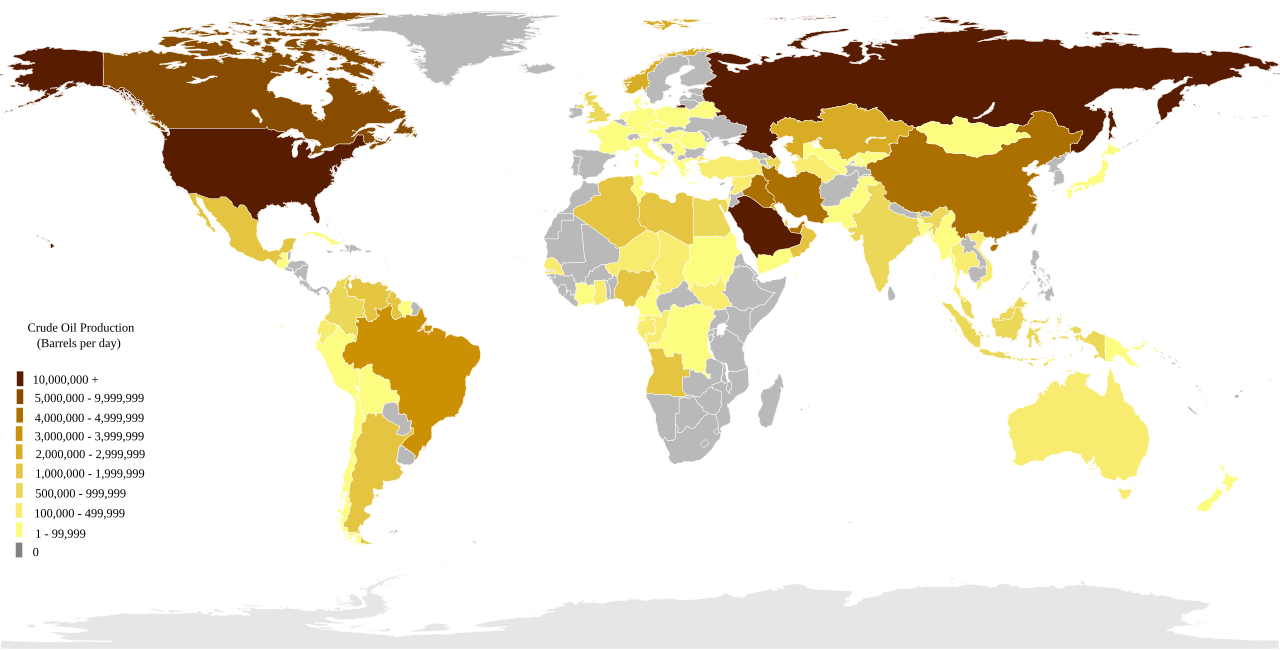
The global energy landscape is a dynamic tapestry, constantly reshaped by technological innovation, geopolitical shifts, and evolving demand. At its heart lies crude oil, a commodity that powers economies, fuels transportation, and underpins numerous industries worldwide. Understanding the intricate patterns of Oil Production By Country is crucial for grasping international economics, environmental challenges, and future energy security.
From the vast oilfields of the Middle East to the technologically advanced tight oil plays of North America, the sources and volumes of global oil supply are always in flux. This article delves into the leading nations spearheading this essential industry, provides a detailed look at the United States' unique regional production hubs, and offers insights into the factors shaping the future of global oil supply.
The Global Titans of Oil Production: Who Leads the Pack?
When examining Oil Production By Country, certain nations consistently stand out due to their sheer output and strategic importance. The top three global producers represent a formidable force in the world's energy markets, each with distinct production methodologies and influences.
The United States: A Resurgent Giant
For several years, the United States has solidified its position as the world's largest crude oil producer. In 2024, its output soared to an estimated 20.1 million barrels of oil per day. This remarkable figure is not merely a testament to its vast resources but also a narrative of technological triumph. The US has seen an astronomical increase in production since 2010, adding nearly 13 million barrels per day. This surge is largely attributable to groundbreaking advancements in unconventional tight oil production.
Tight oil, often extracted through hydraulic fracturing (fracking) and horizontal drilling, has unlocked previously inaccessible reserves trapped within shale formations. This revolution has transformed the U.S. from a significant importer to a global energy superpower, capable of influencing international oil prices and supply dynamics. To learn more about this transformation, read our detailed article: US Oil Production Soars: How Tight Oil Fuels Global Dominance.
Saudi Arabia and Russia: Traditional Powerhouses
Trailing the U.S. are two other titans: Saudi Arabia and Russia. These nations have long been integral to the global oil supply chain, often acting as key players within the OPEC+ alliance to manage market stability.
- Saudi Arabia: Ranking second globally, Saudi Arabia's daily output stands at approximately 10.9 million barrels. As the de facto leader of OPEC, its production decisions have significant ripple effects across the global economy. Its vast, easily accessible conventional oil reserves mean production costs are often lower than in other regions.
- Russia: Holding the third spot, Russia's production hovers around 10.8 million barrels per day. Its extensive network of oilfields, stretching from Siberia to the Arctic, makes it a critical supplier to Europe and Asia. However, geopolitical factors and sanctions can significantly impact its ability to maintain consistent output and access global markets.
It's important to note that these "oil production" figures encompass more than just crude oil. They typically include crude oil, shale oil, oil sands, and natural gas liquids (NGLs), providing a comprehensive picture of a nation's total liquid hydrocarbon output. For a broader look at the nations shaping global supply, explore: Beyond Reserves: Who Produces the Most Oil Globally in 2024?
Beyond Production: The Role of Oil Reserves
While current Oil Production By Country statistics tell us who is supplying the market today, understanding proven oil reserves offers a glimpse into future potential and long-term geopolitical influence. Proven reserves represent the estimated quantities of oil that geological and engineering data demonstrate with reasonable certainty to be recoverable in future years from known reservoirs under current economic and operating conditions.
Interestingly, the countries with the largest proven crude oil reserves are not always the top producers. For instance, Venezuela boasts the largest proven crude oil reserves globally, with other Middle Eastern countries also possessing immense underground wealth. However, factors such as political stability, investment climate, technological capabilities, and economic viability of extraction can significantly hinder a nation's ability to translate vast reserves into high production volumes.
For example, while Venezuela has colossal reserves, its production capabilities have been severely hampered by economic crises and political instability, preventing it from reaching its full potential as a top producer. This highlights a crucial distinction: having the oil isn't the same as getting it out of the ground and to market. Reserves are a strategic asset, but production reflects current operational capacity and market engagement.
A Deeper Dive: Understanding U.S. Regional Oil Production (PADDs)
The vastness of U.S. oil production necessitates a structured approach to management and data collection. This led to the creation of the Petroleum Administration for Defense Districts (PADDs) during World War II. Originally established to organize the allocation of petroleum products for military and civilian use, these five regional divisions are still crucial today for data collection and analysis of U.S. Oil Production By Country, specifically within its own borders.
PADD 3: The Heart of American Oil Production
Among all the PADDs, PADD 3, encompassing the Gulf Coast states (primarily Texas, Louisiana, Mississippi, Alabama, and offshore federal waters), stands as the undisputed leader in daily crude oil production. In 2021, PADD 3 recorded an astounding 7.9 million barrels per day. This dominance is hardly surprising, given that Texas alone is by far the state with the largest crude oil production in the U.S.
The Gulf Coast's importance stems from several factors:
- Rich Geological Basins: The region possesses extensive onshore and offshore oil and gas reserves, including the prolific Permian Basin in West Texas.
- Established Infrastructure: Decades of oil and gas development have created a robust network of pipelines, refineries, and export terminals, making it a logistical hub for crude oil.
- Skilled Workforce and Technology: A concentration of expertise and advanced drilling technologies allows for efficient and high-volume extraction.
- Access to Markets: Its coastal location provides easy access for both domestic distribution and international exports.
PADD 1: A Contrast in Volumes
In stark contrast to PADD 3, PADD 1 (the East Coast) demonstrates significantly lower production volumes. Its daily output was approximately 74 thousand barrels per day in 2021. This substantial difference underscores the geographical concentration of major oil-producing regions within the U.S. The East Coast primarily relies on imported oil and refined products, with its energy infrastructure focused more on consumption and refining than on primary extraction. While there are some smaller plays, the geological conditions for large-scale conventional or unconventional oil production are not as prevalent as in the Gulf Coast.
The other PADDs (PADD 2 - Midwest, PADD 4 - Rocky Mountain, and PADD 5 - West Coast, including Alaska and Hawaii) contribute varying amounts, but none rival the output of PADD 3. This regional disparity highlights the strategic importance of PADD 3 for national energy security and its critical role in shaping U.S. influence in global Oil Production By Country discussions.
The Future of Global Oil Production: Trends and Outlook
The landscape of Oil Production By Country is perpetually evolving, influenced by a confluence of factors ranging from technological breakthroughs to climate policies. Looking ahead, several key trends will likely define the trajectory of global oil supply.
- Technological Advancements: Innovation in exploration and extraction, particularly in tight oil and offshore deepwater plays, will continue to unlock new reserves and improve efficiency. This could lead to further increases in production from non-OPEC countries, particularly the U.S. and Brazil.
- Geopolitical Dynamics: Political stability, conflicts, and sanctions in major producing regions can cause significant market disruptions, impacting prices and supply routes. The ongoing situation in regions like the Middle East or Eastern Europe remains a critical variable.
- Energy Transition and Climate Policies: The global push towards decarbonization and renewable energy sources is a formidable counter-pressure. As more countries adopt stricter emissions targets and invest in green technologies, long-term demand for oil may begin to plateau or even decline, influencing investment decisions in new production capacity.
- OPEC+ Strategy: The alliance between OPEC members and other major producers like Russia will continue to play a crucial role in managing supply to balance market demand and maintain price stability. Their decisions on production quotas can swiftly alter global supply levels.
- Investment Cycles: The long lead times and substantial capital required for oil projects mean that today's investment decisions will shape production five to ten years down the line. A lack of consistent investment due to market volatility or environmental concerns could lead to supply shortages in the future.
For consumers, understanding these dynamics can offer insights into future fuel prices and the broader economic outlook. For investors, monitoring these trends is essential for making informed decisions within the energy sector. The journey of crude oil from the ground to the pump is a complex one, deeply intertwined with global events and technological progress.
Conclusion
The world of Oil Production By Country is a fascinating and complex domain, characterized by a constant interplay of geological endowments, technological prowess, and geopolitical realities. The United States leads the charge, driven by its unconventional tight oil revolution, while Saudi Arabia and Russia remain formidable traditional powerhouses. Beyond current production, proven reserves hint at future potential, though unlocking that potential depends on a myriad of economic and political factors. Within the U.S., distinct regional hubs like PADD 3 exemplify the concentrated effort behind its national output.
As the global energy landscape continues its dynamic evolution, the interplay of technological innovation, environmental mandates, and geopolitical maneuvering will undoubtedly redefine the rankings and strategies of the top oil-producing nations. Staying informed about these shifts is crucial for anyone seeking to understand the currents of the global economy and the future of our energy supply.